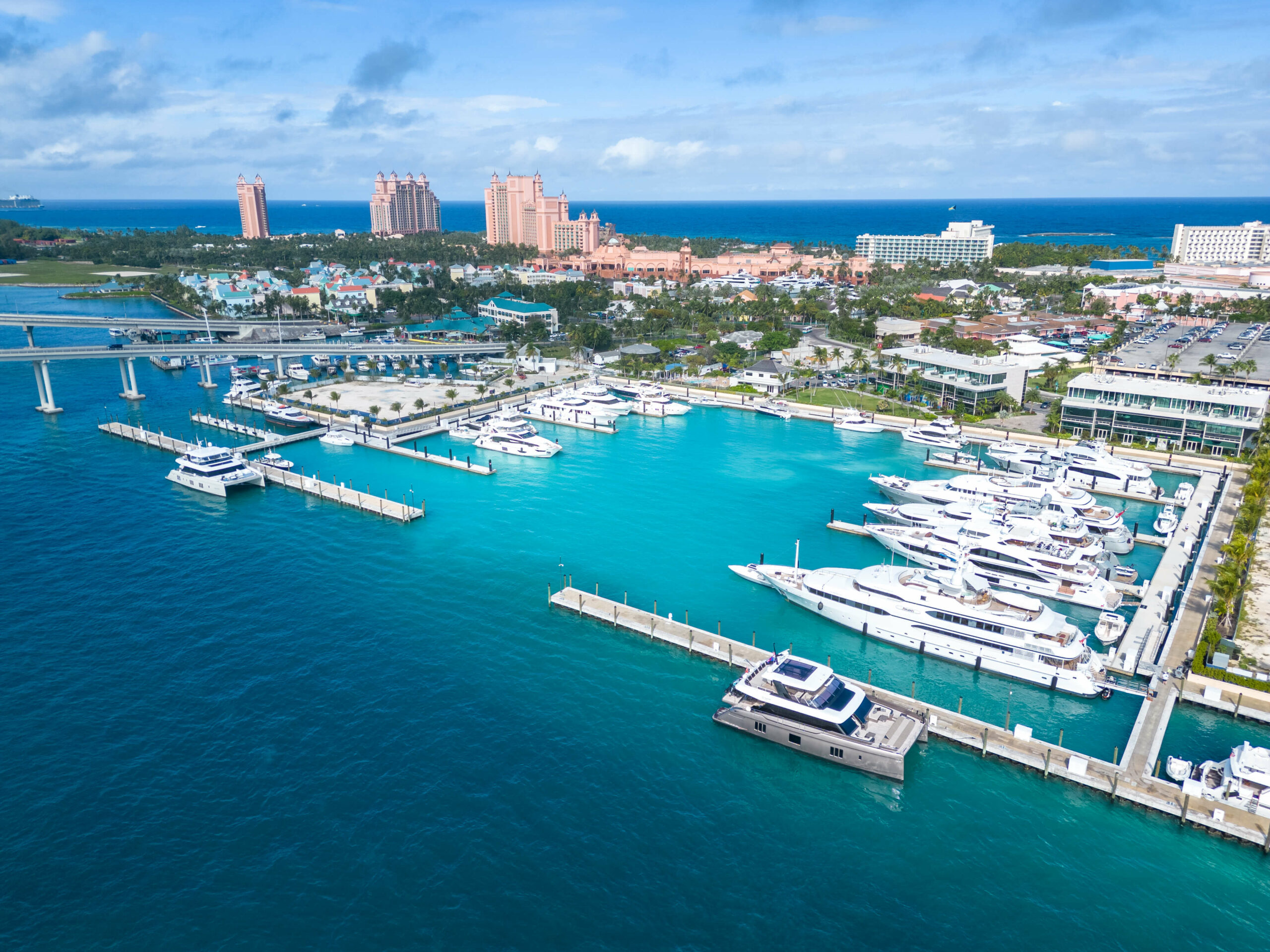
If your nautical adventures bring you through the azure waters of The Bahamas, and you find yourself wondering about the best spot for boat fuel in The Bahamas, look no further than Hurricane Hole Superyacht Marina. Catering especially to the nuanced needs of yacht personnel, we understand the importance of efficient and hassle-free refueling. Here’s why Hurricane Hole stands unparalleled when it comes to fueling your magnificent vessels.
Convenience and Efficiency with In-Slip Fueling
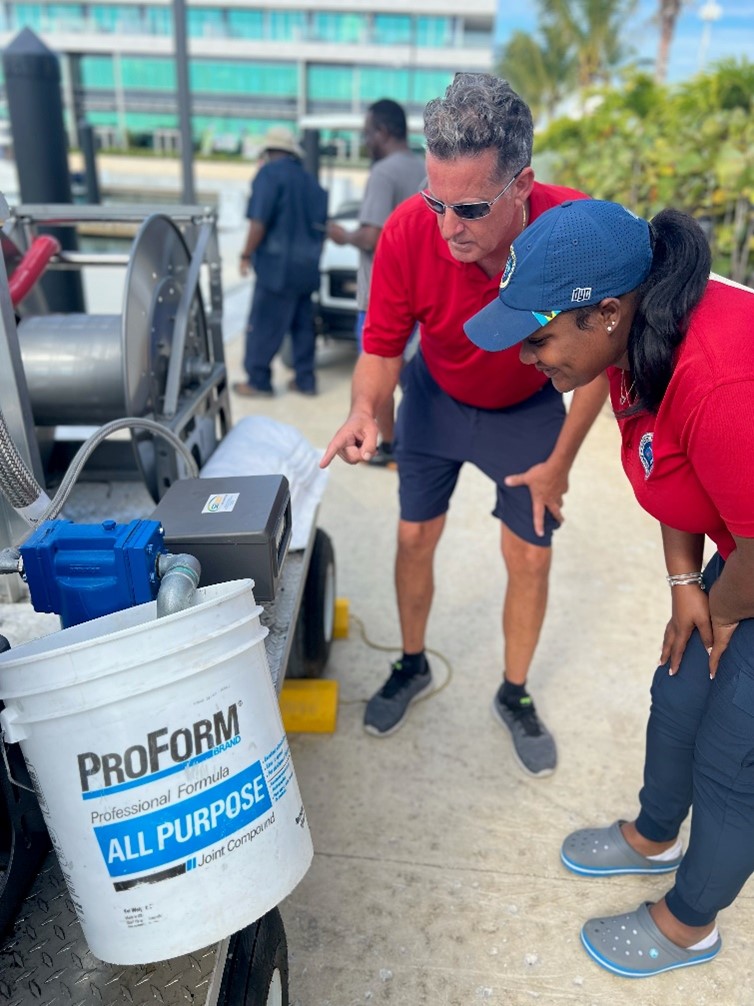
At Hurricane Hole Superyacht Marina, we’re always thinking two steps ahead. Recognizing the unique challenges that yacht captains face when docking large vessels, we introduced The Bahamas’ pioneering in-slip fueling service. For vessels staying one night or more at the marina, there’s no more maneuvering your yacht to a separate fuel dock or waiting in lengthy queues. With our state-of-the-art in-slip fueling system, you can refuel right where your yacht is moored. It’s all about saving you time and effort. To get in-slip fueling, 48 hours’ notice is required, and a minimum of 1,500 gallons (diesel only) is required.
The Top Fuel Dock in Nassau Harbour
Hurricane Hole Superyacht Marina is proud to operate the No. 1 fuel dock in Nassau Harbour, where transient boats can get the best boat fuel in The Bahamas — both diesel and gas — and be on their way. The fuel dock is open 8 a.m. to 5 p.m. daily to the public, located between the two bridges, and our team monitors VHF channels 16 & 11 to make things easy. You’ll be glad you decided to fuel up at our top fuel dock, right by Hurricane Hole.
Competitive Pricing for Boat Fuel in The Bahamas
We believe in offering competitive rates without compromising on quality. By sourcing the best boat fuel in The Bahamas, we ensure that while the prices are economical, the fuel quality remains top-notch, ensuring smooth sails and longer engine life.
Safety First, Every Time
Safety is our priority. Our fueling stations are equipped with advanced safety protocols and are manned by trained professionals who ensure a secure refueling process. We conduct regular safety audits and adhere to international standards, ensuring peace of mind every time you refuel.
Boat Fuel in The Bahamas for All Vessel Types
Whether you’re steering a sleek racing yacht or a grand luxury superyacht, our fueling stations are designed to cater to a broad spectrum of vessels. Our fuel pumps can handle the diverse requirements of different yachts, ensuring that every yacht, irrespective of its size or type, receives the right kind of fuel.
Eco-Friendly Initiatives
We’re not just about providing the best boat fuel in The Bahamas; we’re also committed to doing it sustainably. Our fueling practices and the fuel we offer are in line with eco-friendly standards, ensuring minimal environmental impact.
Strategic Location for Boat Fuel in The Bahamas
Positioned on the scenic Paradise Island, refueling at Hurricane Hole means you’re just moments away from some of The Bahamas’ top attractions. While the fueling is efficient and quick, the surrounding vistas make even a short stop an unforgettable experience.
Choose Hurricane Hole for Boat Fuel in The Bahamas
For captains and crews looking for unmatched convenience, safety, and quality when it comes to boat fuel in The Bahamas, Hurricane Hole Superyacht Marina stands out as the premier choice. Chart your course toward us on your next voyage and experience firsthand the superior service that has made us the go-to marina for discerning yacht personnel. Book your slip today by contacting us online or calling our team at 242-603-1950. You’ll be glad you did.

Frequently Asked Questions
Hurricane Hole Superyacht Marina is considered the best boat fuel provider in The Bahamas for the combination of two distinct capabilities not found together elsewhere: the dedicated fuel dock between the Paradise Island bridges open to all vessels seven days a week with no minimum purchase, and the in-slip fueling system that delivers diesel directly to a vessel's berth. Together these options cover all refueling scenarios from a transient vessel needing a quick top-up to a large superyacht completing a full bunker at its berth before an offshore passage. No other marina in Nassau or Paradise Island offers both services.
Hurricane Hole Superyacht Marina uses ultra-low sulfur diesel through its fuel dock and in-slip fueling system, meeting the lowest sulfur content standard available for marine diesel. Ultra-low sulfur fuel significantly reduces sulfur dioxide emissions compared to earlier marine diesel grades and is required in many port environments and Emission Control Areas under MARPOL regulations. The marina's centralized pump and filter station for the in-slip fueling system provides an additional filtration stage, ensuring clean, high-quality fuel reaches the vessel's tanks regardless of conditions at the storage point.
Hurricane Hole's in-slip fueling system is designed to handle the large fuel volumes required by superyachts and mega yachts. The distribution line infrastructure supports high-flow fueling appropriate for vessels with large-capacity tanks requiring substantial bunker volumes. For vessels requiring very large fuel deliveries, advance notice through slips@hurricaneholemarina.com allows the marina team to pre-position the fuel supply and coordinate the timing to ensure no scheduling conflict with other fueling operations. The fuel dock is also capable of handling significant volumes for vessels that choose to use this option rather than in-slip delivery.
First-time arrivals at the Hurricane Hole fuel dock should navigate to the standard Nassau Harbour western approach at N 25 04.700, W 077 19.180, contact Nassau Harbour Control on VHF 16 for clearance to enter the harbour, and contact the fuel dock team on VHF 16 or 11 for docking guidance. The fuel dock is located between the two Paradise Island bridges on the port side after clearing the second bridge on the western approach. The dock can accommodate a range of vessel sizes but has physical constraints for the very largest superyachts; these vessels are generally better served by in-slip fueling. The team monitors both channels during operating hours and will provide approach instructions.
Outside Nassau, fuel availability is limited and inconsistent across the Bahamian archipelago. Staniel Cay Yacht Club in the central Exumas, Highbourne Cay marina at the northern Exumas, and a small number of other island marinas offer fuel, but quantities, opening hours, and reliability vary significantly. The Family Islands generally have limited commercial fuel access and in remote areas fuel may not be available at all. This infrastructure gap reinforces Nassau and Hurricane Hole's role as the critical fueling point for vessels embarking on extended Bahamian itineraries. Captains planning long Bahamian passages should top up at Hurricane Hole before departure and carry maximum feasible fuel reserves.
Marine fuel prices in The Bahamas are generally higher than in Florida due to import costs, transportation to the islands, and the smaller volume of the local market. Nassau has better supply chain economics than the Family Islands, making Hurricane Hole's fuel pricing more competitive than remote island alternatives within The Bahamas. For vessels based year-round in The Bahamas, fuel cost management involves combining on-site fueling at Hurricane Hole when in Nassau with careful planning of fuel loads for passages where resupply is uncertain. Current fuel pricing at Hurricane Hole can be confirmed by contacting the fuel dock on VHF 16 or calling 242-603-1950.
Fuel purchase records are important for vessel accounting, budget management, charter operations reporting, and in some cases customs and tax compliance. Captains should retain receipts from all fuel dock purchases and document in-slip fueling deliveries with date, quantity, and price. For charter vessels, fuel records are typically part of the overall APA (Advanced Provisioning Allowance) accounting provided to charter clients at the end of each program. Hurricane Hole's fuel team provides receipts for all transactions, and in-slip fueling deliveries are documented through the advance booking communication and on-site delivery confirmation.
The Advanced Provisioning Allowance (APA) is a charter industry standard arrangement where the charterer pays a percentage of the charter fee, typically 30 to 35 percent, in advance to cover operational costs incurred during the program including fuel, provisioning, dockage fees, and other expenses. Fuel is typically one of the largest APA expenditure items, particularly for motor yacht charters with active itineraries. Accurate APA management requires the captain to track fuel consumption and provide detailed accounts to the charter broker and client at program completion. Hurricane Hole's receipt and documentation procedures support this accounting requirement.
Yes. The Hurricane Hole fuel dock is open to all vessels without requiring a marina slip reservation, docking fee, or minimum purchase commitment. Transient vessels passing through Nassau Harbour on route to the Exumas, Abacos, or other Bahamian destinations can stop at the fuel dock for a top-up without committing to a marina stay. This accessibility makes the fuel dock a practical stop for vessels whose program takes them into Nassau Harbour for any reason. For vessels wishing to combine fueling with provisioning or other marina services, the marina team can discuss what short-term options are available for non-overnight visitors.
Hurricane Hole's support for sustainable marine practices in fueling includes providing ultra-low sulfur diesel that meets the highest available standard for sulfur emissions, operating shore power infrastructure that enables generator-off marina stays reducing overall fuel consumption, and designing the in-slip fueling system to minimize spill risk through the centralized pump and filter station and professional fueling team supervision. The marina's environmental management framework includes protocols for spill response and containment, and the fueling team is trained in safe fuel handling practices that minimize environmental impact. These practices align with the growing environmental expectations of the international superyacht community.